

Homeschooling a Teen with ADHD: What Actually Helps
The teen years change everything: more independence, bigger workloads, and bigger feelings.
Homeschooling a teen with ADHD takes a different approach than the early years did.
Here's how to keep the structure, protect the relationship, and help your teen grow into who they're meant to be.
Homeschooling a Teen with ADHD Is a Different Season
What worked when your child was eight probably isn't working at fourteen. That's not because you're doing it wrong. It's because the season changed.
The teen years bring:
- A push for independence. Your teen wants control over their time, even if they're not quite ready to manage it.
- Heavier, longer assignments. Multi-step projects and essays lean hard on planning and follow-through.
- Higher stakes. Transcripts, credits, and "what's next after high school" start to feel real.
- Bigger feelings. Frustration, embarrassment, and self-doubt can hit harder, especially for teens who've struggled for years.
- A shifting relationship. You're still the parent and the teacher, and your teen is pushing back on both.
Homeschooling a teen with ADHD means shifting from managing your student to coaching them. You're still involved. Your role just looks different.
Common Traps (And What to Do Instead)
Every homeschool parent falls into these sometimes. Naming them makes them easier to avoid.
| The trap | Why it backfires | Try this instead |
|---|---|---|
| Doing the planning for them | They never build the skill | Plan together, then hand over one piece at a time |
| All-or-nothing days | One bad morning becomes a lost day | Reset and restart with one small task |
| Fully self-paced online courses | No one notices when they stall | Add live sessions or outside accountability |
| Repeating reminders | Turns you into the enforcer | Agree on a visible plan and check it together |
| Comparing to siblings | Builds shame, not skills | Compare your teen only to their own progress |
8 Strategies for Homeschooling a Teen with ADHD
You don't need all eight at once. Pick two that fit your family and start there.
- Partner, don't police. Sit down together on Sunday and plan the week. When your teen helps make the plan, they're more likely to follow it.
- Build the day around energy, not the clock. Some teens focus better later in the day. Put the hardest subject in their best focus window, wherever that falls.
- Shrink the starting line. "Write the essay" is overwhelming. "Open the doc and write your first sentence" is doable. Starting is often the hardest part.
- Add outside accountability. A coach, a co-op class, or a small group gives your teen someone besides you to show up for.
- Build in movement. A quick walk, a few jumping jacks, or a standing desk can reset an ADHD brain faster than pushing through.
- Use interest as a hook. Connect assignments to what your teen already cares about. A history paper on the history of video games still counts.
- Make time visible. Analog clocks, visual timers, and a written schedule help teens feel time they'd otherwise lose.
- Connect before you correct. A two-minute check-in about their life does more for tomorrow's school day than a lecture about yesterday's.
Want the deeper why behind these? Read our guide on how to support executive function.

The Teen Years Bring Big Feelings, Too
Many teens with ADHD have spent years hearing some version of "You're so smart, if you'd just apply yourself." By high school, plenty of them have quietly decided they're the problem.
You might see it as:
- Shutting down when work feels hard
- Big reactions to small corrections
- Avoiding subjects they've struggled with before
- Saying "I'm just bad at school" or "What's the point?"
This is where your words matter most. Name the effort, not just the outcome. Separate who they are from what's hard for them. And remind them often: different is not broken.

Planning for High School Credits and the Future
Homeschooling a teen with ADHD also means thinking about transcripts, credits, and life after high school. A few things help:
- Document skills, not just subjects. Depending on your state, families may be able to record leadership, personal development, and life skills as electives.
- Keep a simple portfolio. Save projects, presentations, and accomplishments as they happen.
- Think beyond college. Trade school, entrepreneurship, ministry, the military, and the workforce are all valid paths. Help your teen explore what fits.
- Check your state's requirements so you know what you need to document.
When Homeschooling a Teen with ADHD Needs More Support
Sometimes the strategies help, but they're not enough on their own. It may be time for more support if:
- You're spending most of the day redirecting instead of teaching
- School has become the main source of conflict in your home
- Your teen is falling further behind despite real effort
- Your teen seems isolated or is losing confidence
- You're exhausted and don't know what else to try
Needing support isn't a failure. It's a smart next step. Many families add a coach, a small-group program, or both. Learn more about ADHD homeschool support and what it can look like for your family. If your days feel shapeless, our ADHD homeschool schedule guide is a practical place to start.
How ZEAL Helps Families Homeschooling a Teen with ADHD
ZEAL is a live, small-group program for homeschool teens, developed by Carolina ADHD Coaching. It meets online on Tuesdays and Thursdays from 1:30 to 3:00 PM ET, with an optional Sunday Focus Lounge at 7:00 PM ET.
- Faith: Each session opens with a short Christ-centered reflection.
- Focus: Students learn executive function skills, then use them on their own homeschool assignments with live body doubling.
- Future: Leadership, collaboration, and real-world projects are designed to build confidence and purpose.
Your curriculum stays yours. ZEAL adds the structure, coaching, and community around it. See how a session flows on the Curriculum page.
Homeschooling a Teen with ADHD FAQ
Is homeschooling good for teens with ADHD?
It can be a great fit. Homeschooling allows flexible pacing, movement, and interest-led learning. It also removes a lot of outside structure, so many teens do best when families add accountability and executive function support.
Should I let my teen set their own schedule?
Gradually, yes. Start by planning together, then hand over more control as your teen shows they can manage it. The goal is independence with a safety net.
How many hours a day should my teen do school?
Focus on focused work, not hours logged. Short, intentional blocks with breaks often get more done than a long day of half-attention.
How do I motivate a teen with ADHD?
ADHD brains tend to respond to interest, urgency, novelty, and connection. Build those into the day with choice, deadlines that feel real, variety, and working alongside others.
Does my teen need a diagnosis to get support?
Not for ZEAL. If executive function is a struggle, your teen is welcome.
You Don't Have to Homeschool a Teen with ADHD Alone
Your teen is capable, creative, and worth the effort. You deserve support, too. See how ZEAL helps homeschool teens build skills and confidence.
Related Resources

ADHD Homeschool Support That Sees Your Student as an Individual
Why bright homeschoolers with ADHD get stuck, and what real support looks like beyond another curriculum. Outside accountability, executive function coaching, and community, explained.
Read Article
How to Support Executive Function in Teens (Without Becoming the Nag)
Executive function is a whole toolkit. Skill-by-skill strategies and phrases to try for starting, planning, time, organization, and focus.
Read Article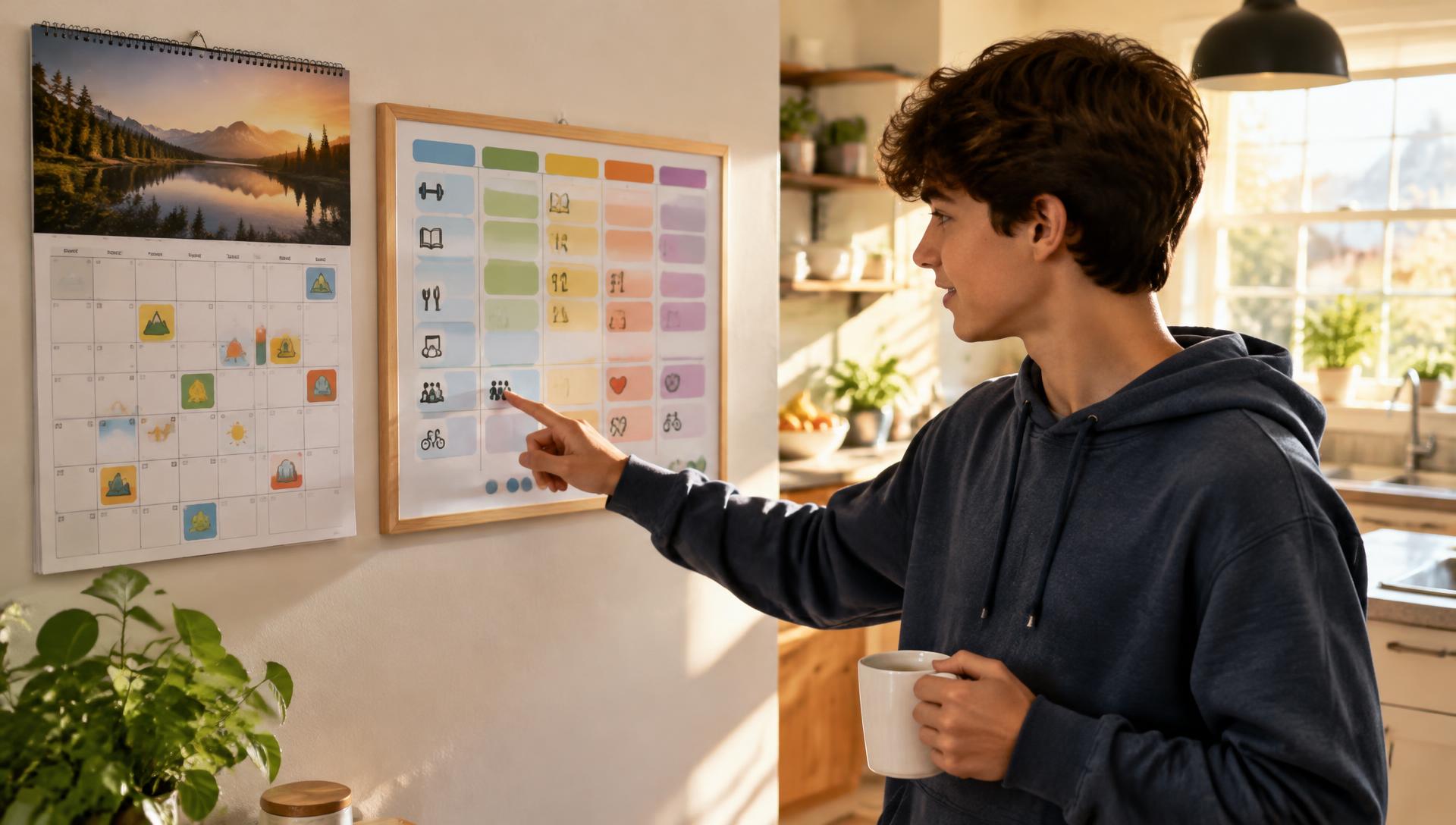
The ADHD Homeschool Schedule That Works With Your Teen's Brain
A rhythm, not a rulebook. A sample day, a weekly plan, block vs. loop scheduling, and a backup plan for the hard days.
Read Article